
Examples of Keyword Intent with Brief Explanations
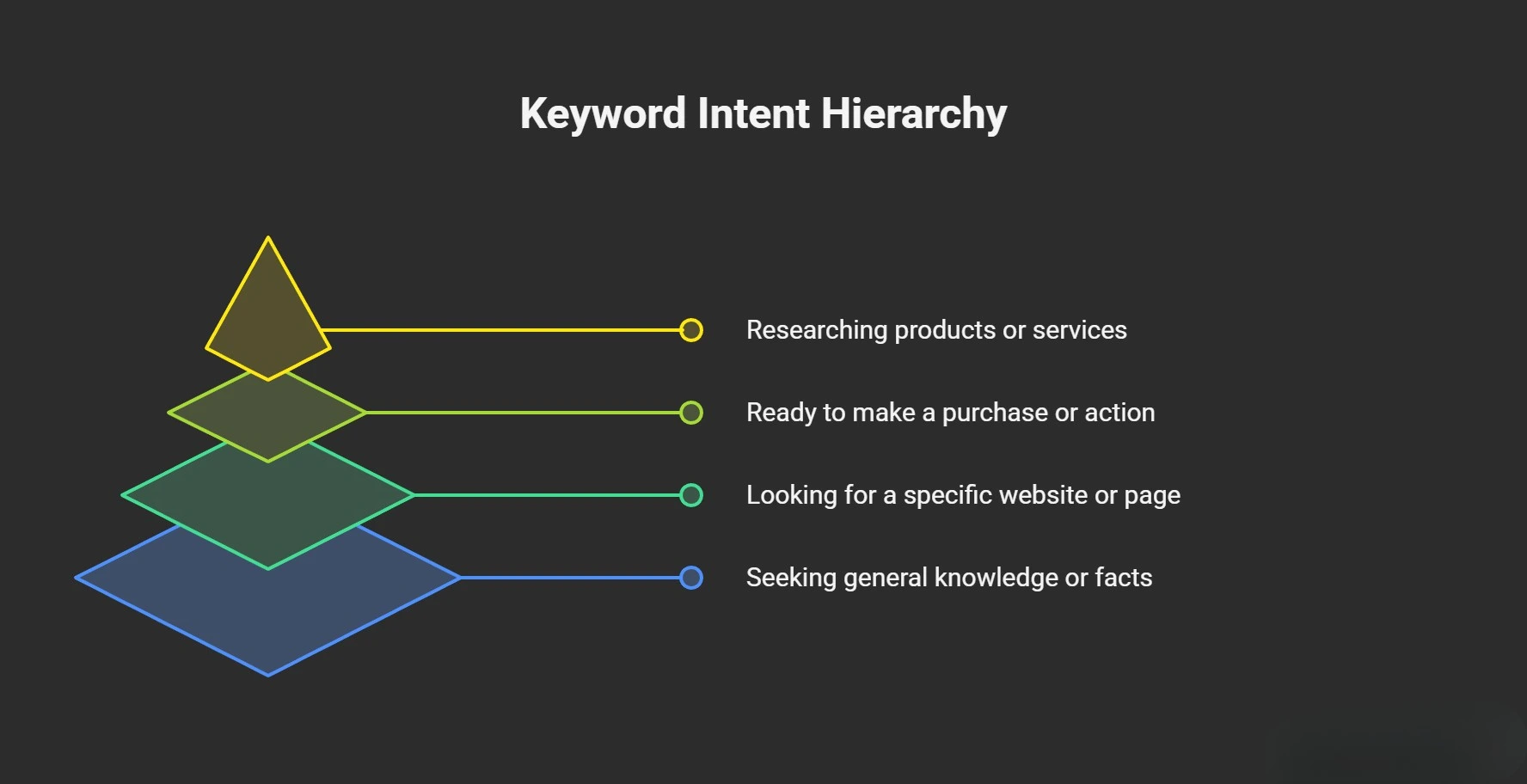
Ever feel like you’re selecting keywords in the dark? You are not alone. Understanding keyword intent is not a mystical SEO secret; it’s actually relatively straightforward once you see real-world examples. This article breaks down every keyword intent type with clear, practical examples you can use right now.
1. Informational Intent
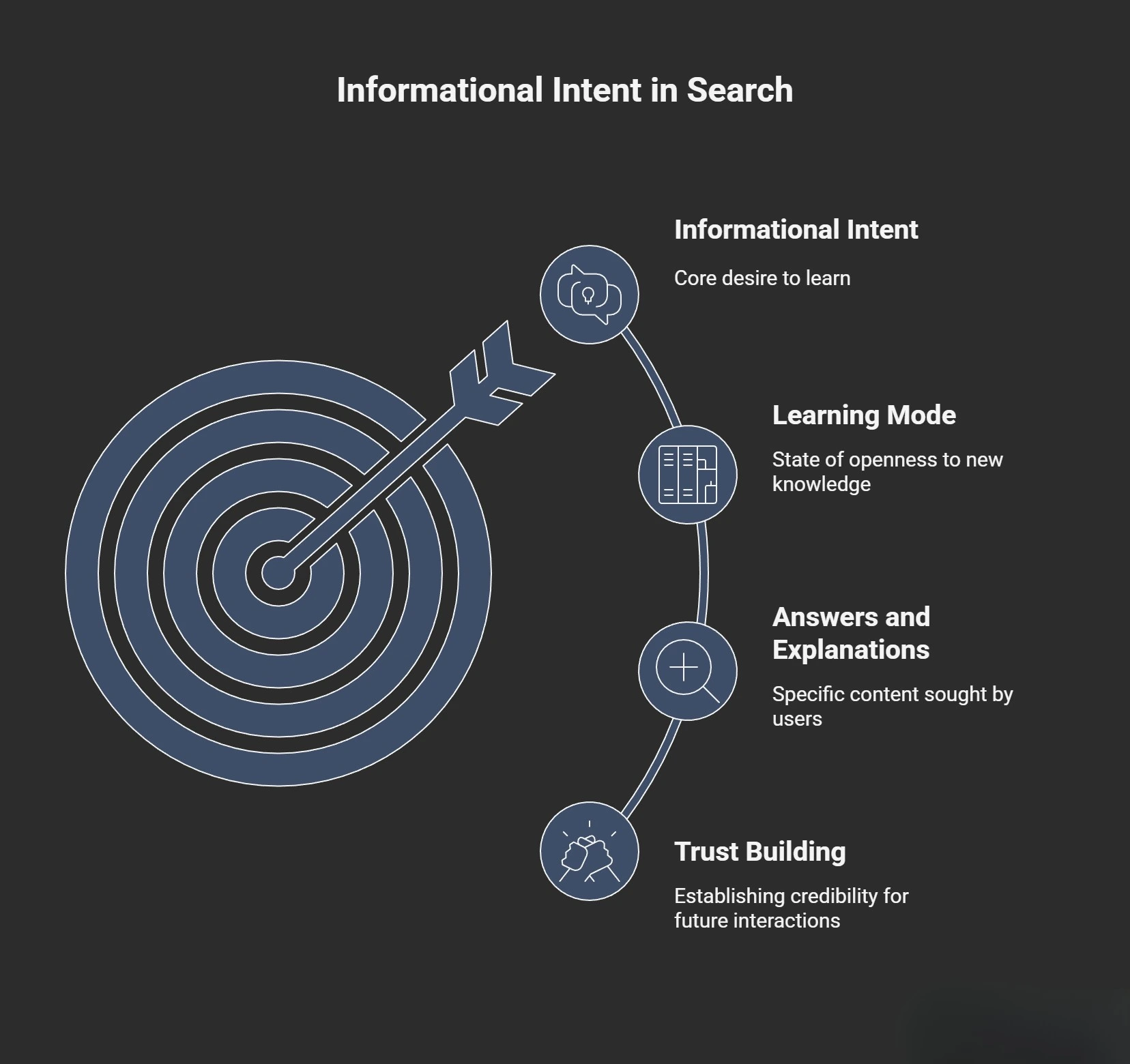
What users want: Learn or understand something new.
When someone searches with informational intent, they are in learning mode. They need answers, explanations, or step-by-step instructions. These are the majority of Google searches, and they’re your chance to gain trust before someone’s ready to buy.
Here are some actual keyword intent examples:
What is technical SEO?
This could be the very first search in a person’s SEO journey, as they seek a definition of what it is. They may be a student, a new marketer, or a business owner attempting to understand what their developer is talking about.
How to fix crawling issues.
This person is already familiar with crawling issues. Now, they need actionable steps to solve a specific problem they’re facing on their website.
SEO Checklist for Beginners
They seek a complete roadmap. This searcher is overwhelmed and needs structure to help them understand what to do first, second, and third.
Why is the meta description important?
They’ve heard about meta descriptions but don’t understand why they matter. They’re looking for the “why” behind the advice.
Informational intent is typically the first step in the user’s journey: they’re looking to educate themselves before proceeding to the next step. Create content that genuinely helps, and people will remember you when they’re ready to take action.
2. Navigational Intent Examples
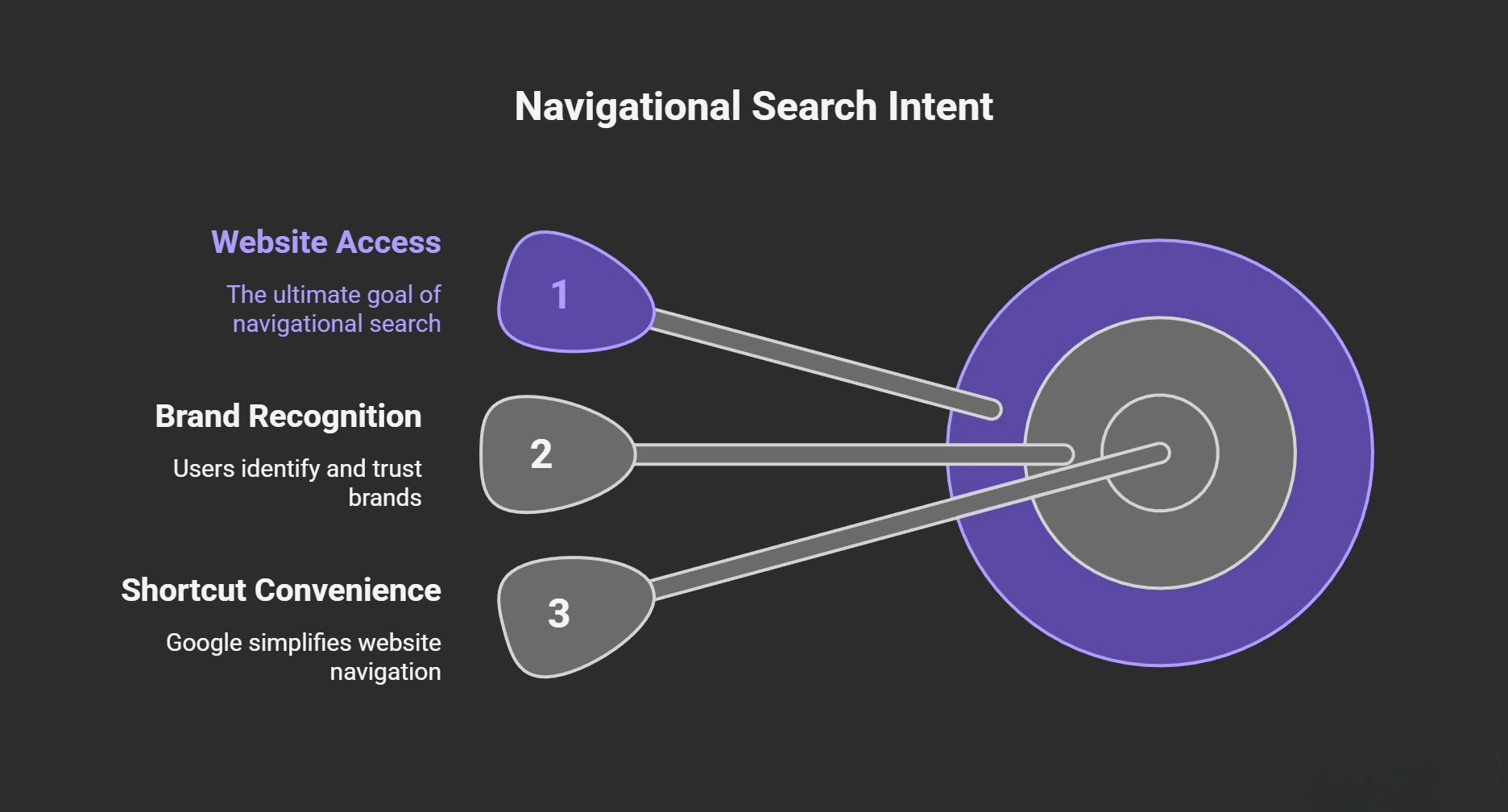
What users want: To reach a particular website, brand, or page.
Rather than typing the full URL into the address bar, users search for the brand or website name in Google. They already know where they want to go; they’re using Google as a shortcut.
Real examples:
Yoast SEO Login
The user already uses Yoast SEO and wants to log in quickly to their account. They are not comparing plugins, nor learning about features.
Google Search Console
They want to check data on how their website is performing. They know exactly what they want.
Ahrefs pricing page
They know Ahrefs, and they would like to check the current pricing options available. This persona is beyond the discovery stage.
Semrush trial
They have decided that they want to try Semrush and thus are looking for the signup page for a free trial.
These keywords demonstrate apparent brand loyalty or awareness. Navigational keywords are generally easy to rank for because they directly relate to your brand, but there is little point in trying to rank for competitor keywords in this category.
3. Commercial Intent Examples (Research/Comparison)
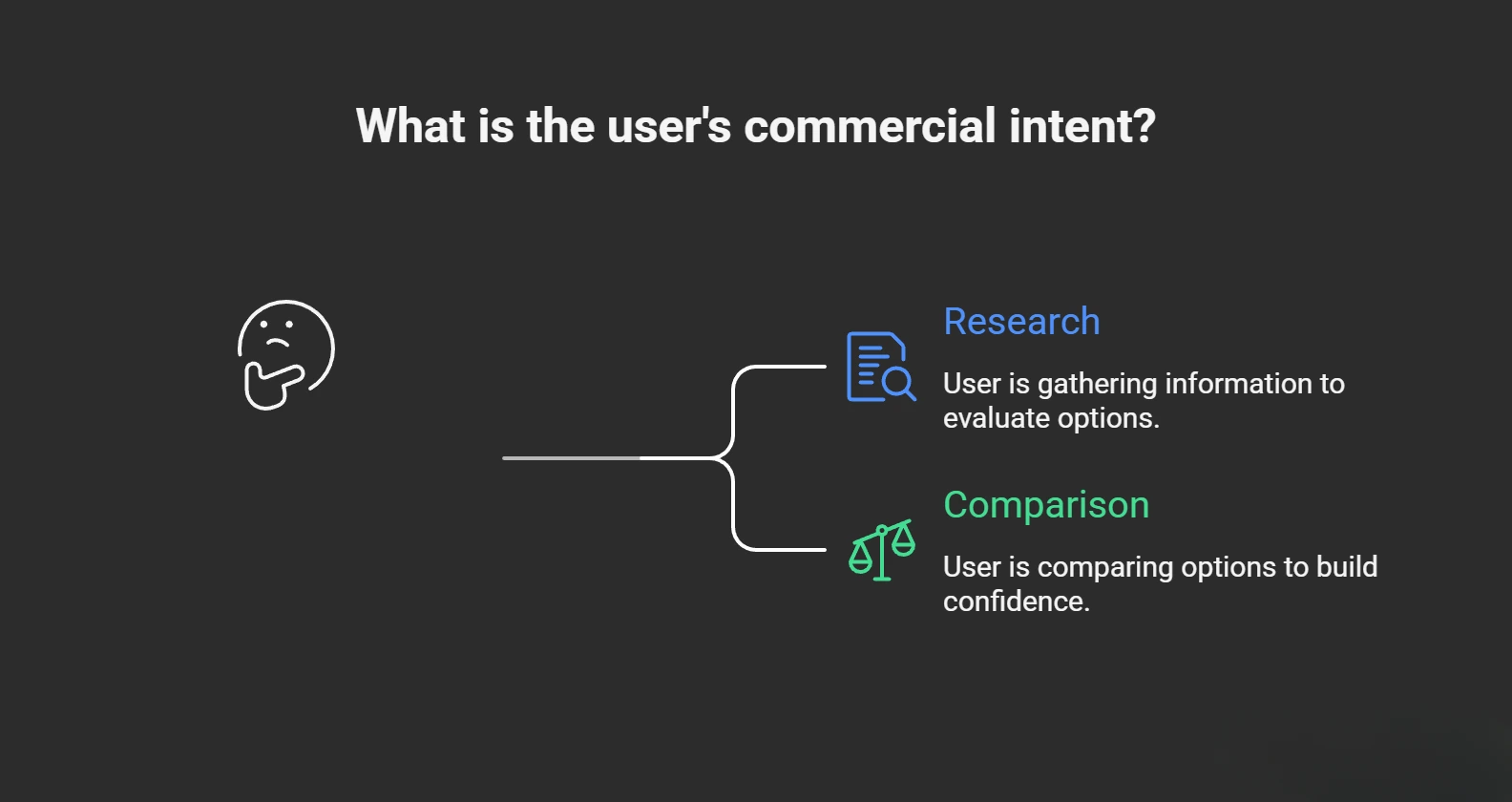
What users want: To evaluate options before making a choice.
Commercial intent falls in that sweet spot between learning and buying, where a user is seeking information highly related to an action but isn’t yet ready to take the action. They’re doing their homework, comparing options, and building confidence in their choice.
Consider the following examples:
Best SEO tools 2025
People in this category know they need an SEO tool, but don’t know which one fits their needs and budget. They require expert opinions to compare the different options.
Yoast vs Rank Math
This individual has narrowed it down to just two options, so he needs someone to break down those differences so that he can make the final decision.
Best keywords for dentists
A dentist – or their marketer – wants to know what keywords will actually bring in patients, not just traffic.
Top AI writing tool.
They’re investigating the use of AI tools to accelerate content creation. They want to see what’s available before they commit to anything.
Why are these commercials? Because people are considering a purchase but haven’t made a decision yet. They’re one step away from making a purchase. They know they need something, but they’re still figuring out which option is best. They want proof, validation, and comparisons before making a commitment. This is where reviews, comparison articles, and case studies become incredibly valuable.
4. Transactional Intent Examples
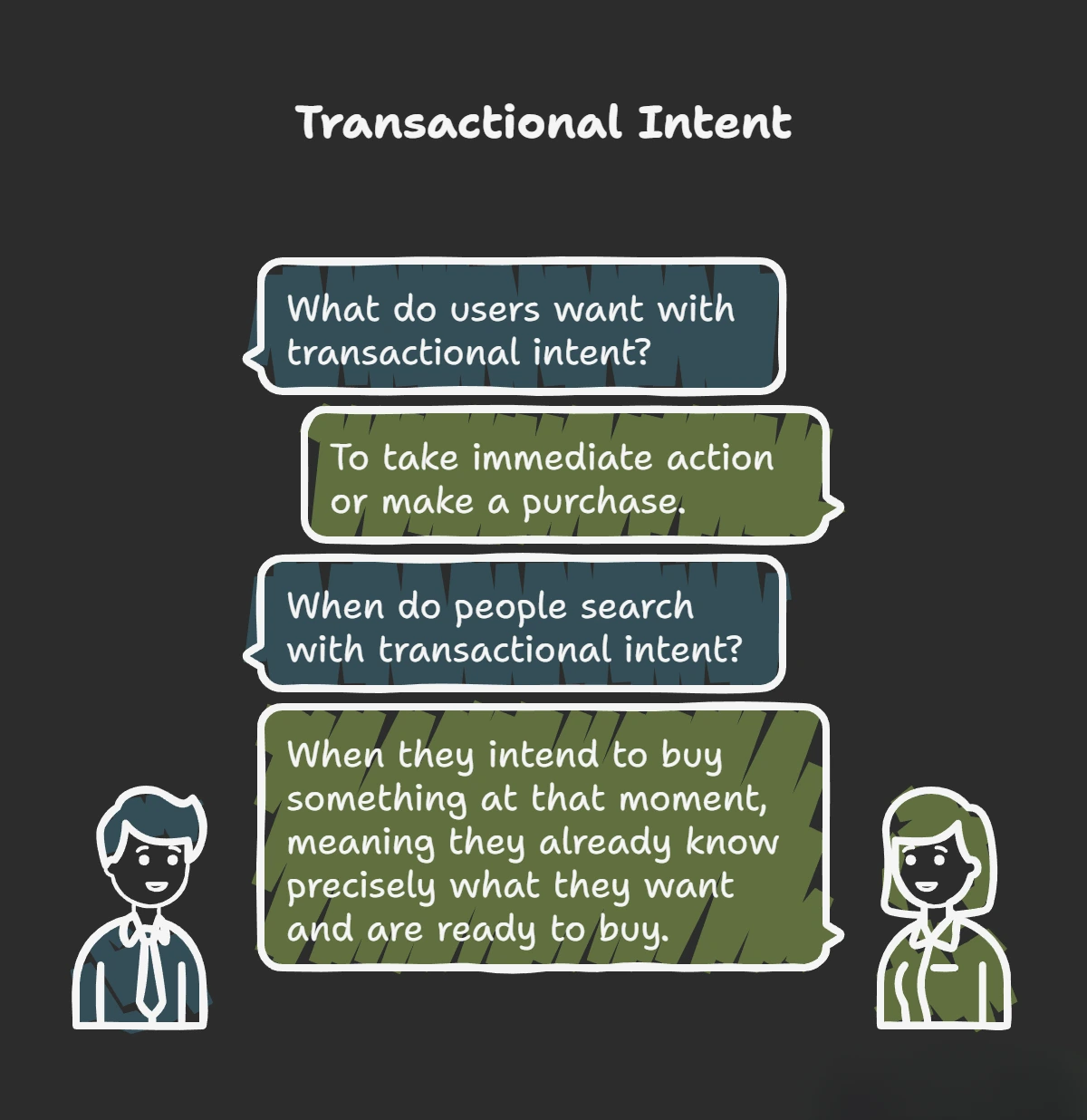
What users want: To take immediate action or make a purchase.
This is decision time. People are searching with transactional intent when they intend to buy something at that moment, meaning they already know precisely what they want. There’s no more research needed. They’re ready.
Real-world examples:
Buy SEO audit service
The person needs an SEO audit and is looking to buy it now. They want to know about providers, price, and ways to get started right away.
Hire a freelance SEO expert
A business owner or marketing manager has budget approval and is actively looking to hire someone today.
SEO course price in Nepal
This is a location-specific searcher who’s ready to see the price. They’re comparing final costs before enrolling.
Technical SEO service
They recognize the need for professional assistance with technical SEO. They are hunting for service pages, not blog posts.
Google already knows when users have transactional intent, and its ranking systems have determined which of the existing pages best satisfy searchers’ intent. If you’re offering a service or product, ensure your landing pages are crystal clear about what you offer and how people can purchase it.
How to Quickly Identify Intent from any Keyword
You don’t need any costly tools to figure out keyword intent. Here’s a simple three-point method that actually works:
1. Verify the SERP page type
Type your keyword into Google, and see what ranks. Google’s already telling you what it considers relevant for a keyword. Are you seeing blog posts? Product pages? Comparison articles? That’s Google showing you the intent.
If all the top results are “how-to” guides, the intent is informational. If they’re all product pages with prices, it’s transactional. Simple as that.
2. Check the wording
Certain words are dead giveaways. Look for these patterns:
Informational: how, what, why, guide, tutorial, learn
Navigational: brand names, login, sign in, official
Commercial: best, top, review, vs, compare, alternative.
Transactional: buy, price, cost, hire, order, discount
By formulating keywords with intent-specific words, your chances of being seen by people with matching search intent will increase.
3. Check ad presence & SERP features
Paid ads at the top of the page are a good indicator of user intent from Google. Tons of shopping ads? Transactional. Featured snippet and “People Also Ask” boxes? Usually informational. Knowledge panels about a company? Navigational.
These elements are not random; they demonstrate how Google matches intent to the correct content format.
Get more knowledgeable about the SERP analysis guide for deeper insights
Frequently Asked Questions
Can one keyword have multiple intents?
Yes, most keywords have hybrid search intent and can contain a combination of intentions. For example, “running shoes” might be informational, learning about types; commercial, comparing brands; transactional, ready to buy. Check the SERP to see which intent dominates.
Does search intent affect my rankings?
Absolutely. In fact, Google’s page explaining how it ranks results even states that its ranking systems need to determine intent first before returning relevant results. And if your content isn’t matching the intent behind that keyword, you just won’t rank, no matter how perfect your on-page SEO is.
How often should I check keyword intent?
Check it every time you target a new keyword. Intent may change over time as user behavior evolves. What was informational last year could be commercial today. Quick SERP checks take seconds and save you from creating content that misses the mark.
What if my content matches the keyword, but not the intent?
You won’t rank well, plain and simple. If you find intent that is unanimous and doesn’t align with what you have to offer, then it will be challenging to rank unless you have a high-authority site. Either adjust your content to meet the intent or target a different keyword that fits what you’re offering.
Understanding keyword intent examples isn’t just a theory; this is a practical skill that makes all the difference between content that ranks and content that disappears. Start with the SERP, trust what you see, and create content that matches what people actually want. That’s how you bridge the gap between knowing SEO and doing SEO that works.