
LSI Keywords: What They Are & How to Use Them for Better Rankings
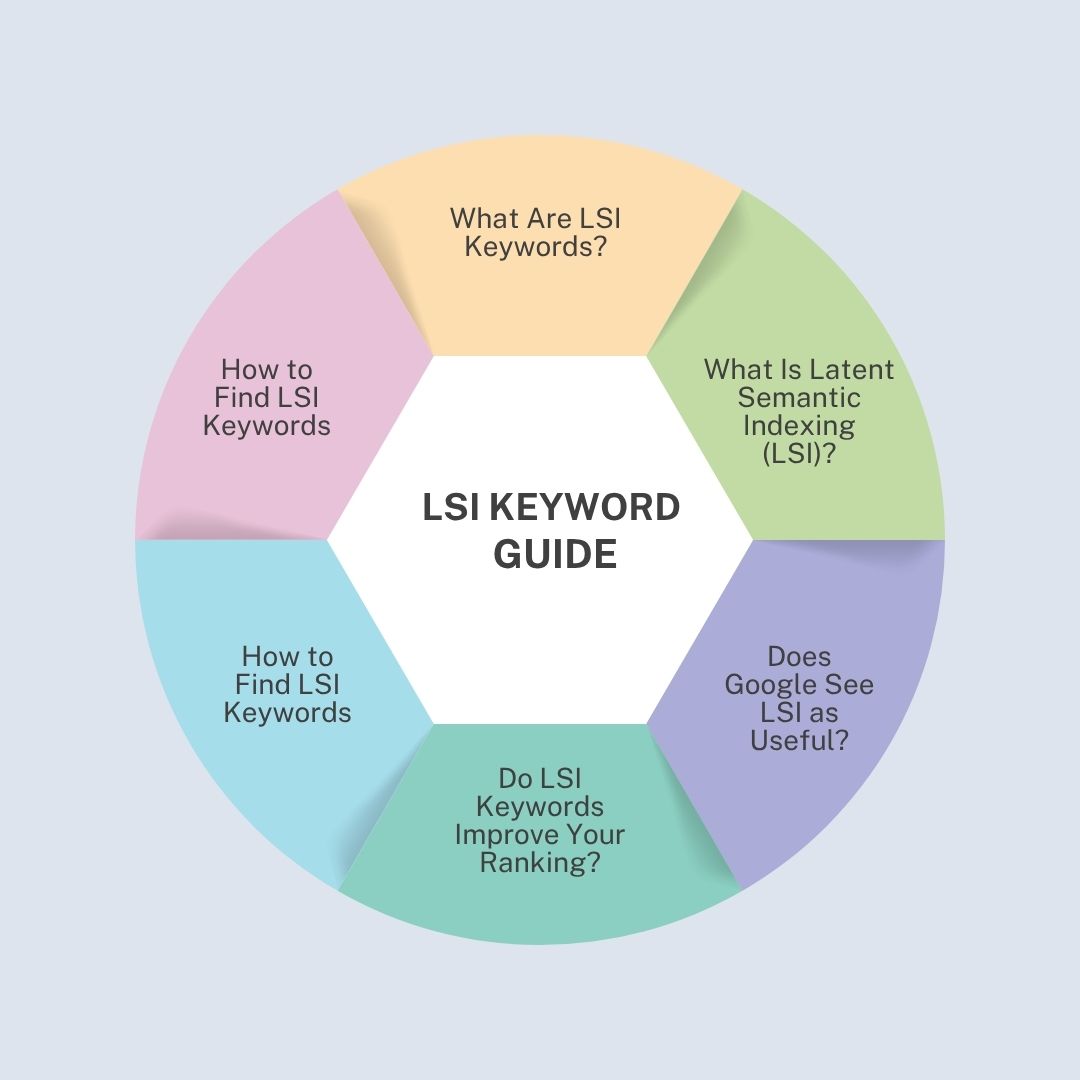
What Are LSI Keywords?
LSI keywords are words and phrases that are semantically related to your main keyword. They help search engines understand the context and meaning of your content by providing additional relevance signals. If you’re new to this, you can also Learn Keyword Research to understand how these terms connect to your main topic. When you include these related terms naturally throughout your content, you’re giving Google a clearer picture of what your page is actually about.
Think of LSI keywords as the supporting cast that helps your main keyword shine. They create a web of meaning around your primary topic, making it easier for search engines to categorize and rank your content appropriately.
What Is Latent Semantic Indexing (LSI)?
Latent Semantic Indexing is an information retrieval technique developed in the 1980s that identifies relationships between terms and concepts within content. It was designed to address the issues of synonymy (different words with the same meaning) and polysemy (the same word with multiple meanings).
In simple terms, LSI helps computers understand that when you search for “apple,” you might be looking for information about the fruit or the technology company. By analyzing patterns and relationships between words that frequently appear together, LSI technology can determine the context and deliver more relevant results.
Does Google See LSI as Useful?
Here’s where things get interesting: Google has publicly stated that it doesn’t use LSI technology in its algorithm. John Mueller, Google’s Search Advocate, has clarified this point several times.
However, Google absolutely does look for contextually relevant keywords and semantic relationships. The concept behind LSI, understanding context through related terms, is still very much alive in Google’s modern algorithms, just implemented through more advanced technologies like BERT, neural networks, and entity recognition.
So while the term “LSI keywords” might not be technically accurate from Google’s perspective, the practice of using semantically related terms is still incredibly valuable for SEO.
Do LSI Keywords Improve Your Ranking?
The short answer is yes, but indirectly. Using semantically related keywords helps your content:
Become clearer
When you incorporate related terms naturally, your content becomes more comprehensive and easier to understand both for readers and search engines. This clarity signals quality, which Google rewards.
Match search intent better
People search for the same information in different ways. By including various related terms, you’re more likely to match the specific phrases your audience is using to find content like yours.
Cover the topic more fully
Content that thoroughly explores a topic tends to rank better. Using related keywords helps ensure you’re addressing different aspects of your subject, creating more valuable content.
While Google may not use the specific LSI technology, the principle of semantic relevance is a cornerstone of modern SEO. Backlinks lists LSI keywords as one of Google’s 200 ranking factors, nothing they helps search engines extract meaning from ambiguous words.
How to Find LSI Keywords
To find semantically related keywords, you can use various techniques and tools. Some popular methods include analyzing Google’s autocomplete suggestions, studying the “People Also Ask” section in search results, and using specialized SEO tools that provide related keyword suggestions. The key is to identify terms and phrases that are conceptually related to your main topic and naturally incorporate them into your content.
Google Autocomplete
Start typing your main keyword into Google’s search box and note the suggestions that appear. These predictions are based on common searches related to your term and can provide excellent LSI keyword ideas.
“People Also Ask” questions.
When you search for your main keyword, look for the “People Also Ask” box in the results. These questions often contain valuable related terms and can also inspire new content sections.
Related Searches
Scroll to the bottom of Google’s search results page to find the “Related Searches” section. These terms are semantically connected to your main keyword and can help expand your content’s relevance.
SEO Tools
Keyword Planner, Ahrefs, and UberSuggest are SEO tools that can generate lists of related keywords along with useful metrics like search volume and competition. These insights can help you prioritize which terms to include.
Competitor blog analysis
Study content that’s already ranking well for your target keyword. What related terms are they using? This competitive analysis can reveal valuable semantic keywords you might have missed.
How to Show Google You Focus on LSI Keywords
The key to effectively using semantically related keywords is natural integration. Here’s how to implement them properly:
Create comprehensive content
Don’t just scratch the surface of your topic. Dive deep and explore different aspects, naturally incorporating related terms as you go. Aim to create the most thorough resource on your subject.
Use related terms in strategic locations.
Use semantically related keywords in your headings, introduction, conclusion, and image alt text. This signals to Google that these terms are important to your content’s theme.
Answer related questions
Create sections that address the questions you found in “People Also Ask.” This not only incorporates related keywords but also increases your chances of appearing in featured snippets.
Focus on natural language
Write for humans first, search engines second. Use related terms conversationally rather than forcing them into your content. Google’s algorithms are advanced enough to recognize keyword stuffing.
Update existing content
Don’t just apply these principles to new content. Revisit your existing pages and enhance them with relevant semantic keywords to improve their performance.
Remember, the goal isn’t to use as many related keywords as possible, but to create genuinely helpful content that thoroughly covers your topic. When you do this well, you’ll naturally include the semantic terms that help Google understand and rank your content.

Quick Summary
While the term “LSI keywords” might not be technically accurate according to Google, the concept of using semantically related terms is fundamental to modern SEO. By incorporating these associated words and phrases naturally throughout your content, you help search engines better understand your topic and provide more value to your readers.
Start by identifying your main keyword, then use the methods outlined above to find related terms. Create comprehensive content that naturally incorporates these terms, and you’ll be well on your way to improving your rankings.
The most successful SEO professionals understand that it’s not about gaming the system with technical tricks; it’s about creating genuinely valuable content that thoroughly addresses what users are searching for. When you focus on that goal, the semantic relationships between your keywords will fall into place naturally, and your rankings will reflect the true value of your content.
Remember, SEO isn’t just theoretical; it’s a practical skill that improves with application. Each piece of content you optimize is an opportunity to refine your approach and see real results. Start implementing these strategies today, and you’ll be building valuable skills that translate to tangible outcomes.
People Also Ask
What are LSI keywords, and how do they help SEO?
LSI keywords are semantically related words and phrases that help search engines understand context; using them naturally makes your content more comprehensive and better aligned with user intent.
Does Google use Latent Semantic Indexing (LSI)?
Google says it doesn’t use classic LSI technology, but it does rely on modern semantic understanding (BERT, neural nets, entities), so the practice of using related terms still matters.
How do I find good semantically related keywords for my page?
Use Google Autocomplete, “People Also Ask,” related searches, and SEO tools (Ahrefs, Keyword Planner, Ubersuggest) also inspect top-ranking competitor pages for the terms they use.
Want to take your keyword strategy further? Learn about long-tail keywords next.